Walk a jobsite after a difficult rain and you can smell the steel. Blog posts we sunk recently gleam with moisture, panels ping as they cool, and the team disputes which finish will stand up far better on a windy corner that faces the road. Powder-coated steel or galvanized steel. I have actually set up miles of both for property owners, ranches, colleges, distribution centers, and one extremely certain alpaca cattle ranch. The choice is not scholastic. It influences exactly how your fence searches day one, how it weathers for years, and what it sets you back to keep when a young adult backs a truck right into it at 2 a.m.
If you are weighing bids from a fencing company or a solo fencing installer, you will listen to both terms, occasionally sprayed like magic words. They are not compatible. They explain two different methods to shield steel from the adversary every fence encounters the minute we established it in the ground: corrosion.
What each finish really is
Galvanizing is a zinc layer on steel. The majority of commonly, the product is hot-dip galvanized. After fabrication, the steel is cleaned up in acid, fluxed, after that submersed in molten zinc. A collection of zinc-iron alloy layers bond to the steel, covered by almost pure zinc. The layer reacts metallurgically with the base metal, which is why it stands up to pounding, abrasion, and blowing up far better than paint. Electro-galvanizing exists also, where zinc is used in a thin layer using electroplating. We see that even more in auto trim and indoor elements. For fencings that face rainfall, soil, and roadway salt, hot-dip reigns.

Powder layer is a completely dry paint process. The steel is cleansed, occasionally phosphated, after that billed with static power. A tinted powder is splashed on, after that cured in an oven. The warmth thaws and crosslinks the material right into a strong skin. Powder can be shiny or matte, smooth or distinctive, black or school-bus yellow. It is thicker than wet paint and contains no solvents once treated, which makes it tougher than a lot of field-applied coatings.
Here is the method many Fence Contractors, including my group, rely on for premium job. You can utilize them together. A duplex system implies hot-dip galvanized steel with a subsequent powder layer. The zinc offers sacrificial corrosion protection, and the powder keeps oxygen and moisture off the zinc. Both layers sluggish corrosion much more than either one alone.
What the steel is fighting
The primary consider coating long life is atmosphere, not brand name label. I matured installing fences near the Atlantic. Salt hangs in the air. It works out vaguely on every surface area and draws moisture out of clear blue sky. We set a galvanized entrance there and it chalked in 3 years. The zinc was doing its task, yet it was striving every day.
Drive 2 hours inland and the very same entrance will look fresher twice as lengthy. Industrial air, farming chemicals, winter de-icing salts kicked up by rakes, even leaf acids from an enormous oak, all alter just how quick steel sacrifices itself. Dirt chemistry matters as well for posts. Clay holds water. Sandy loam drains pipes tidy. If a fence company is not asking about your location, your dirt, and what strikes your fencing seasonally, the quote may be cheaper, however it is not precise.
In straightforward terms: zinc corrodes sacrificially. It provides itself up so the underlying steel does not. Powder coat is a barrier. It keeps water and oxygen off the steel listed below. If the obstacle is breached by a chip or a deep scrape, rust begins at the damage site, usually hidden under the film.
Where galvanized steel shines
I lean on bare hot-dip galvanized steel when misuse is certain. Livestock lawns are a good example. Goats eat every little thing, cattle massage their necks on rails, tractors bump messages. You can gouge and scratch a galvanized surface and it still withstands corrosion because the zinc alloy layer belongs to the steel, not a covering on top. We have installed corrals that lived 10 to 20 years with nothing more than a hose down and the periodic changed hinge.
For chain link, commercial safety fence, and temporary construction panels, galvanizing keeps tasks on spending plan while shaking off kicks, ladders, and dragged concrete bags. You can weld galvanized steel in the area if you recognize what you are doing. We grind back finishing in the weld area, make the repair work with ventilation and correct PPE, after that retouch with a zinc-rich paint that fulfills ASTM A780. Is that perfect protection at the weld? No. Does it help energy repair work and gate retrofits? Yes, provided you prep tidy metal and use sufficient zinc-rich product.
There is a cost advantage as well. A great deal of supply, from 1 5/8 inch rails to 2 7/8 inch articles, comes common galvanized. Preparations are short. Powder finishing, specifically custom-made colors, can add weeks. For local work where timetables drive every little thing, galvanized often wins for accessibility alone.
Where powder-coated steel rules
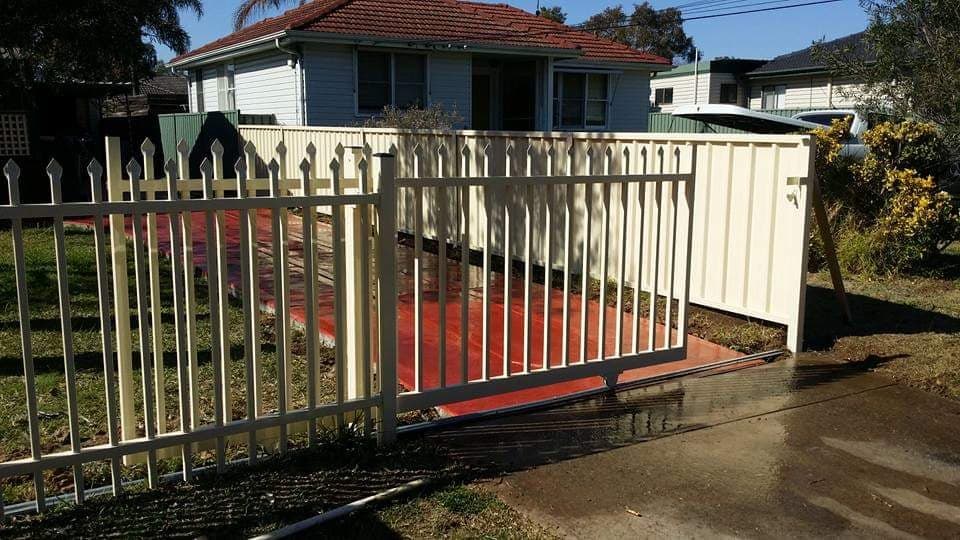
Appearance is the noticeable front-runner. When a homeowner asks for a fence that discolors visually into a landscape, a matte black powder layer on steel pickets is hard to defeat. The color takes in light, the lines stay crisp, and the finish does not chalk like paint. Decorative steel panels with powder coat look at home in front of contemporary stucco and century-old brick alike. Neighborhood associations frequently require black, bronze, or forest environment-friendly, and powder delivers those shades consistently.
Tactile top quality matters also. Powder really feels smooth under the hand, and it remains cooler than bare galvanized in direct sun since it does not show as intensely. On pool rooms, that issues. We get fewer telephone calls concerning warm rails when we utilize a low-gloss powder.
Maintenance can be straightforward. Laundry with a mild detergent, rinse, and the fence breaks back to life. If you chip it, you can touch it up with color-matched paint sticks or spray. Will the spot suit flawlessly? Personally, within a foot, you could see it. From the walkway, it goes away. On a rental building that sees yard staffs and bikes bouncing off it, that ease has real value.
Powder coat likewise allows structures that hide finger prints or little scuffs. If you have youngsters and a basketball hoop near the fence, that detail saves you from continuous wiping.
Duplex systems, when you desire both
Galvanized plus powder coat is my go-to within view of saltwater, and for high-dollar homes where long-lasting look secures resale worth. The zinc protects the steel even if you nick the powder. The powder guards the zinc from fast consumption. The mathematics is not purely additive, yet the life expansion is actual. A hot-dip layer in the community of 45 to 100 microns, covered by 60 to 120 microns of healed powder, survives coastal air and winter season salting far better than either layer alone.
There are cautions. If a maker does not correctly prepare the galvanized surface before powder coating, you welcome bond problems. Zinc has to age or be dealt with so the powder sticks. That suggests sweep blasting or chemical preparation, cleaning change residues, and designing drain holes so parts do not catch acid or zinc during galvanizing. Smart fencing suppliers engineer this at the drawing phase with extra-large air vent holes and hang points. If your Fencing Contractor can not inform you how the shop preps galvanized before powder, be cautious with deal duplex offers.
Thickness, stamina, and the misconception of bulletproof coating
Finish does not add architectural stamina. A 16 gauge 2 inch square article with immaculate powder still flexes under the exact same wind load as the exact same article galvanized. Your fence installer should size articles and spans for lots, then select surface for longevity and look. Frequently, property owners put cash into finish while undersizing posts. We have re-sleeved a lot of pretty fences that wobbled after their initial 50 miles per hour gust.
Coating thickness is a balancing act. Thicker powder can orange-peel or chip a lot more conveniently at sharp edges. Thicker galvanizing can leave drips and aesthetic irregularities. For a front-yard masterpiece, I accept a somewhat thinner, smoother zinc layer under the powder to obtain tidy lines. For a storage facility yard, I want large, also lumpy zinc that shakes off forklifts.
Costs you can plan on
Numbers differ by area and by steel rates, but a simple policy holds. Bare galvanized is the least expensive, powder-coated over bare steel includes 10 to 30 percent, and duplex galvanized plus powder can add an additional 10 to 25 percent over that. Custom shades, textured powders, and rush tasks nudge the costs higher. If a Fence Company supplies powder only a hair over galvanized, ask what the base steel is, what preparation is consisted of, and what the warranty covers.
Consider life process, not just mount day. On a suburban home, if a black decorative fencing lasts 15 to two decades looking sharp with only washing, and the galvanized option requires an aesthetic repaint in 7 to 10, those timelines matter. On a farm where tools and livestock beat on it, the long lasting utility of hot-dip might last longer than the appealing coating that shows every scrape.
Repairs, real-world style
We repair fencings that have lived difficult lives. A snowplow hooks a cable, a teenager drifts a pickup right into an edge, or a tree goes down half an arm or leg across a panel. With galvanized, we grind, cut, bond a new section, and repair zinc with a cold galvanizing substance. The touched-up area will weather differently, transforming dull grey faster than surrounding metal, yet protection is restored.
With powder-coat only, if the damage is small, we feather-sand and color-match. For a deck-level scrape on a black panel, a knowledgeable Fencing Contractor can make it disappear to the eye. For success, panels return to a coater or obtain changed. You can not re-bake a section in your driveway.
On duplex, repair work follow the exact same rule. Small chips obtain color and zinc-rich guide. Success are element swaps. Choose a fence system that makes use of modular panels and bolted braces. Welded-on site components look smooth, however they make future substitute painful.
Climate tales that transformed my mind
We built a fencing around a seaside schoolyard where youngsters play soccer daily and sea fog rolls in 5 nights a week. The district desired black, and they desired it to last. The most affordable quote provided powder-coated just. We pitched duplex. The numbers little bit in the beginning, however we set out what soccer balls, salt, and seasonal upkeep would do. Ten years later on, we have spot-touched four articles and exchanged two braces. The coating reads as brand-new from the pathway. The neighbor nearby chose bare galvanized to save cash money. It is still standing, but the zinc has dulled to a mottled grey, and the parents have asked two times regarding repainting.
Another time, a trucking depot on a prairie chose bare galvanized chain link with hefty zinc due to the fact that their forklifts clip everything. They approved the utilitarian appearance. 5 winters later on, after sand, salt, and a lots bump repair services, they thanked us for recommending thick galvanizing. Powder would have broken to a polka dot inside a season there.
Warranties and what they truly cover
If a fencing contractor estimates a 10 or 20 year surface warranty, reviewed it. Many cover factory issues like bond failure, irregular peeling, or extreme chalking. They do not cover chips from influence, scratches from weed trimmers, or rust at cut points made on website and not secured correctly. Galvanizing warranties commonly tie back to coating thickness and ecological categories. Powder guarantees speak in gloss retention and color discolor determined in Delta E. Ask your Fence Company to equate those into ordinary terms for your address.
I maintain an affordable gloss meter in the vehicle and a zinc density gauge. They are not unique. They help resolve debates when a house owner wonders if their five-year-old fencing is maturing typically. If your installer can determine, you are not suggesting feelings, you are talking numbers.
Environmental notes that rarely make the brochure
Galvanizing involves acid baths, change, and a kettle of liquified zinc. Reputable galvanizers recover and recycle where possible, however the process is commercial. At end of life, galvanized steel stays completely recyclable. Powder finish contains no solvent exhausts during treating, which is why coaters enjoy it, and utilized powder is much easier to accumulate than overspray paint. That said, inadequately controlled shops can still squander product and energy. Choosing qualified coaters and galvanizers issues. Your fencing installer ought to recognize which regional plants hold ISO or AGA accreditations and which do not.
If overflow is a worry near a fish pond or garden, ask for paperwork on zinc runoff rates. In a lot of cases, the numbers are low, and zinc is already a trace nutrient in dirts. Still, if you have delicate plantings, we might spec duplex so the powder slows zinc usage and runoff.
Choosing based on use case
When you speak to a Fencing Contractor who has actually been around some time, the questions come speedy. How close is deep sea or a dealt with road? What do your sprinklers hit? Do you have a grass staff that edges hard every Friday? Pets, goats, or kids climbing up? Sunlight direct exposure on the south side? Good answers steer the finish.
Here are quick picks I stand by for common scenarios.
- Coastal property within a mile of browse, or homes within view of wintertime salting courses: Duplex galvanized plus powder layer on ornamental steel. Define sweep blasting between procedures and a minimal powder film construct around 80 microns. Farm, ranch, or warehouse with constant effects: Hot-dip galvanized, with hefty layer. Approve cosmetic irregularities. Design for changeable components. Urban front yard with HOA shade preferences: Powder-coated decorative steel over galvanized substratum ideally. If powder only, insist on durable prep and a recorded service warranty from the coater. Chain web link for colleges and parks: Galvanized fabric and framework, with black or eco-friendly polymer-coated textile only if spending plans allow. Take into consideration black powder-coated articles in high-visibility sections for aesthetics. Pool enclosures and modern builds: Powder-coated steel or light weight aluminum. If aluminum is picked for rust resistance, ensure articles are engineered for tightness. Where steel is made use of, duplex in high-humidity microclimates.
Installation details that secure the coating you paid for
A finish, nevertheless great theoretically, stops working if installation is careless. The little details issue. We established posts in concrete that crowns above grade so water sheds. We keep cut finishes secured. On galvanized, that suggests an instant hit with zinc-rich paint at every field cut. On powder, that means etching, priming, and painting prior to assembly whenever feasible, and circling back as soon as the fencing is plumb so bolt heads and little nicks are touched.
Hardware option is a little line product that repays. Stainless fasteners do not leave rust streaks down a white column. Nylon bushings on gates lower metal-on-metal wear that chews powder off joints. We position irrigation heads so they do not blast one message every morning. Tiny modifications like those buy years.
When a Fencing company sends a team that relocates with care, you see it in a years when rails still stick around to braces without red halos from underfilm rust.
Understanding criteria without sinking in alphabet soup
Standards exist for a reason. ASTM A123 covers hot-dip galvanizing for architectural forms. ASTM A153 touches bolts and hardware. ASTM F1043 and F1083 talk with structure for chain web link. For powder, AAMA 2604 and 2605 are building standards extra usual in home windows and curtain walls, but they inform what great exterior coverings look like in terms of chalk, discolor, and erosion resistance. You do not require to memorize them. You can, nevertheless, ask your Fence Contractors which specs their products satisfy. If the response is silence, maintain shopping.
Typical hot-dip galvanizing density for fencing structure lands in the 45 to 100 micron array, yet it can go higher relying on steel chemistry and immersion time. Powder layer density on fence panels typically runs 60 to 120 microns. Thicker is not constantly far better. Harmony and bond count for more.
A short, straightforward upkeep plan
Keep surface active with small, regular habits.
- Rinse the fencing two times a year with a yard pipe, regularly in coastal or de-icing zones. Make use of a mild detergent to remove salts and grime, then rinse clean. Inspect cut ends, brackets, and gate hinges every springtime. Touch zinc or paint where you see bare metal. Keep dirt and mulch off the lower rail and article base by at least an inch. Let air distribute and water drain. Adjust lawn sprinklers so they are not pounding one area daily. Difficult water leaves mineral crust that welcomes underfilm corrosion. Clear vines and ivy that catch dampness. If you want eco-friendly cover, make use of a trellis inches far from the fence.
You do not need a registration maintenance plan, simply a 30 minute check two times a year.
Aesthetics that hold up to scrutiny
Black powder coat is classic for a reason. It hides the geometry of pickets and articles so your eye captures the backyard past. Bronze warms block and rock. Charcoal lives well with modern-day grays. Apartment and eggshell sheens hide more sins than high gloss, specifically where dust and plant pollen are constant.
Bare galvanized has its very own straightforward appeal. It claims energy, job, and no nonsense. In minimalist designs, a brand-new galvanized surface with its crystalline spangle looks intentional. It will certainly plain to gray. If you want the brightness later, you will certainly require to repaint or accept the patina.
Color matching issues when enhancements come years later. Powder from various batches can change a little. Work with a Fence Company that logs your original color code so substitutes are close.
What your installer wishes you would ask
Ask for cross-sections or example promo codes. An excellent producer will certainly have offcuts with finish you can manage. Ask that does the Timber Paling Fence Company galvanizing and who does the powder. Regional names lug track records amongst professions. Ask how area cuts obtain secured, and that is in charge of it. If a fence installer shrugs at that question, they do not have the surface like a pro does.
Ask whether the crew has installed your chosen system in your zip code before. Photo assistance, but I like to drive you past a 3 to 5 years of age task so you can see how it ages. Not a staged photo, the real fencing with yard trimmings stayed with the base.
Ask concerning lead times in composing. Powder-coated customized shades can include two to six weeks. If you are timing around a swimming pool inspection or a canine fostering, that matters.
Final phone calls from the field
- You can not phony seaside deterioration resistance. If you smell salt, duplex the steel or choose aluminum developed for fencings. If you select light weight aluminum, approve much more flex and layout accordingly. If influence is regular, select galvanizing with hefty coat and style for exchangeable components. Pretty touches can be added at eye-level and in secure zones. If you want black that remains stunning with marginal work, powder coat makes its keep. It just requires a base that combats rust where chips will happen. Galvanized first makes sense if budget plan allows.
A fence is a collection of options, not a single product on a shelf. The ideal finish is the one that matches your climate, your use, and your tolerance for upkeep. An experienced fencing installer will not give you buzz, just the compromises as they have lived them, the repair work they have actually done at midnight in sleet, and the telephone calls they did not obtain due to the fact that the work lasted longer than the issue. Pick based upon that kind of experience, not the brightest pamphlet. Then stroll your fence after the next rainfall. If we did our work, you will listen to the panels ping, see water grain or drain tidy, and not think of deterioration whatsoever. That is exactly how you know the choice was right.